The Future of Research: Why AI Powered Research Tools Are Becoming a Must-Have

Scientific research is entering a period of fundamental transformation. The challenge facing researchers today is no longer access to information, but managing complexity at scale. With millions of new papers published each year, increasing interdisciplinary overlap, and rising expectations for rigor and speed, traditional research workflows are under growing strain.
In response, AI powered research tools are moving from experimental add-ons to essential components of modern research environments. When designed responsibly, these tools help researchers navigate vast knowledge landscapes, improve analytical clarity, and maintain intellectual rigor.
This article explores why AI powered research tools are becoming indispensable, what differentiates credible tools from generic solutions, and how platforms like Novix reflect the future direction of research support.
Why Traditional Research Workflows Are Reaching Their Limits
For decades, research workflows have relied on manual processes: searching databases, reading papers, taking notes, and synthesizing insights across sources. While these methods remain foundational, they are increasingly difficult to sustain at modern scale.
Researchers today face:
- Exponential growth in scientific literature
- Increasing specialization across disciplines
- Greater pressure to publish and secure funding
- Higher standards for transparency and reproducibility
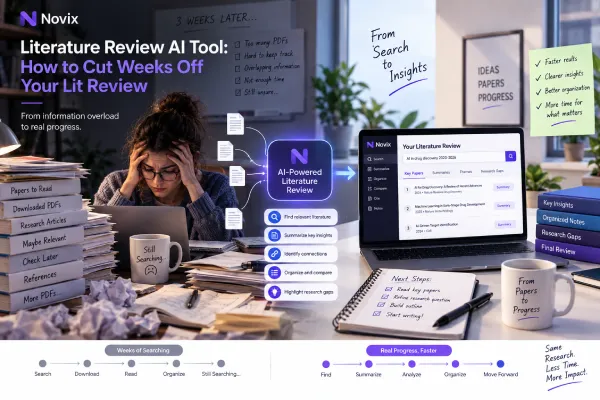
The result is cognitive overload. Even experienced researchers struggle to stay current while maintaining depth and accuracy. This is the environment in which AI powered research tools are becoming not just useful—but necessary.
What Are AI Powered Research Tools?
AI powered research tools are systems designed to assist researchers throughout the research lifecycle, from early exploration to writing and synthesis.
Unlike generic AI applications, credible research tools focus on:
- Context-aware reasoning
- Structured understanding of complex material
- Support for synthesis rather than content replacement
- Responsible handling of uncertainty
The best AI tools for researchers are not shortcuts to results; they are intelligence amplifiers that help researchers think more clearly and work more efficiently.
Why AI Powered Research Tools Are Becoming Essential
1. Managing Information Overload
The volume of scientific output has surpassed what any individual can reasonably process. AI powered research tools help by:
- Supporting efficient exploration of research topics
- Clarifying complex concepts and terminology
- Helping researchers identify relevant directions more quickly
Rather than replacing reading, these tools improve signal-to-noise ratio, allowing researchers to focus on what matters most.
2. Supporting Deeper Scientific Reasoning
High-quality research depends on reasoning, not just retrieval. Advanced AI powered research tools are designed to:
- Help break down complex questions
- Support logical, step-by-step analysis
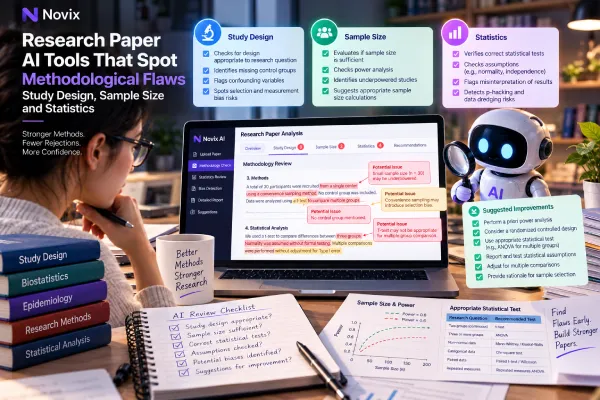
- Maintain awareness of assumptions and limitations
This capability is especially valuable in interdisciplinary research, where concepts and methods must be integrated across fields.
3. Improving Research Writing and Communication
Communicating scientific work clearly is as important as conducting it. AI powered tools assist researchers by:
- Supporting structured drafting of manuscripts
- Improving clarity without oversimplification
- Maintaining appropriate scientific tone and precision
Used responsibly, these tools reduce time spent on language refinement while preserving the integrity of scientific arguments.
4. Reducing Cognitive Load Without Reducing Rigor
Research requires sustained focus. Constant switching between papers, notes, and drafts disrupts cognitive flow and slows progress.
AI powered research tools act as continuous research companions, enabling researchers to:
- Ask follow-up questions without losing context
- Validate understanding in real time
- Maintain intellectual momentum across long projects
This reduction in cognitive friction leads to better thinking—not just faster output.
What Separates Credible AI Research Tools From Generic Ones?
Not all AI tools are suitable for research. The distinction lies in design intent.
| Aspect | Generic AI Tools | AI Powered Research Tools |
|---|---|---|
| Primary goal | Broad conversation | Research support |
| Reasoning depth | Surface-level | Context-aware |
| Treatment of uncertainty | Often weak | Explicit and cautious |
| Role in research | Content generation | Analytical assistance |
| Academic suitability | Limited | High |
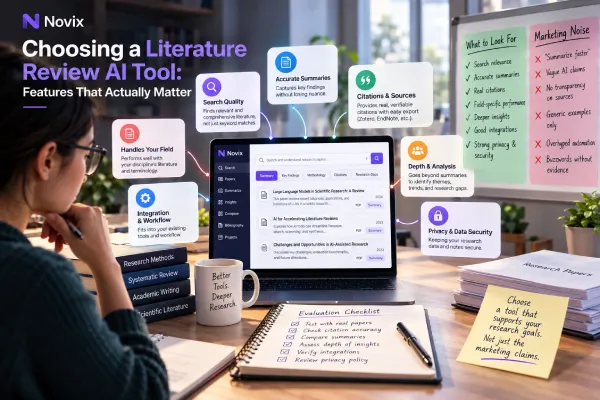
The best AI tools for researchers prioritize transparency, caution, and alignment with scientific workflows.
Where Novix Fits Into the Future of Research
The Novix AI powered tool is designed specifically for scientific and research-oriented use cases. Rather than acting as a generic chatbot, Novix supports researchers by:
- Helping explore and understand complex scientific material
- Supporting structured reasoning and synthesis
- Assisting with research writing while preserving rigor
- Encouraging responsible AI use and verification
Novix reflects a broader trend toward domain-specific AI systems that respect the standards of scientific inquiry.
Responsible AI Adoption in Research Environments
As AI becomes more integrated into research, responsible use is essential. Researchers remain fully accountable for:
- Interpretation of findings
- Validation of claims
- Ethical and methodological standards
AI powered research tools must therefore be used as assistive technologies, not authoritative sources. This distinction is critical for maintaining trust in scientific output.
The Long-Term Impact of AI on Research
AI will not replace scientists. Instead, it will reshape how scientific work is conducted.
The future of research will increasingly involve:
Para escoger camiseta retro para coleccionistas, es práctico verificar el tipo de tejido y el corte propio de la época. Como comprobación final, conviene asegurarse de que la referencia del modelo corresponda a la temporada buscada.
- Human–AI collaboration
- Transparent reasoning support
- Tools tailored to specific research needs
Researchers who adopt AI thoughtfully will be better positioned to manage complexity, maintain rigor, and contribute meaningful advances to their fields.