How AI Agents Are Changing Scientific Research and Data Analysis
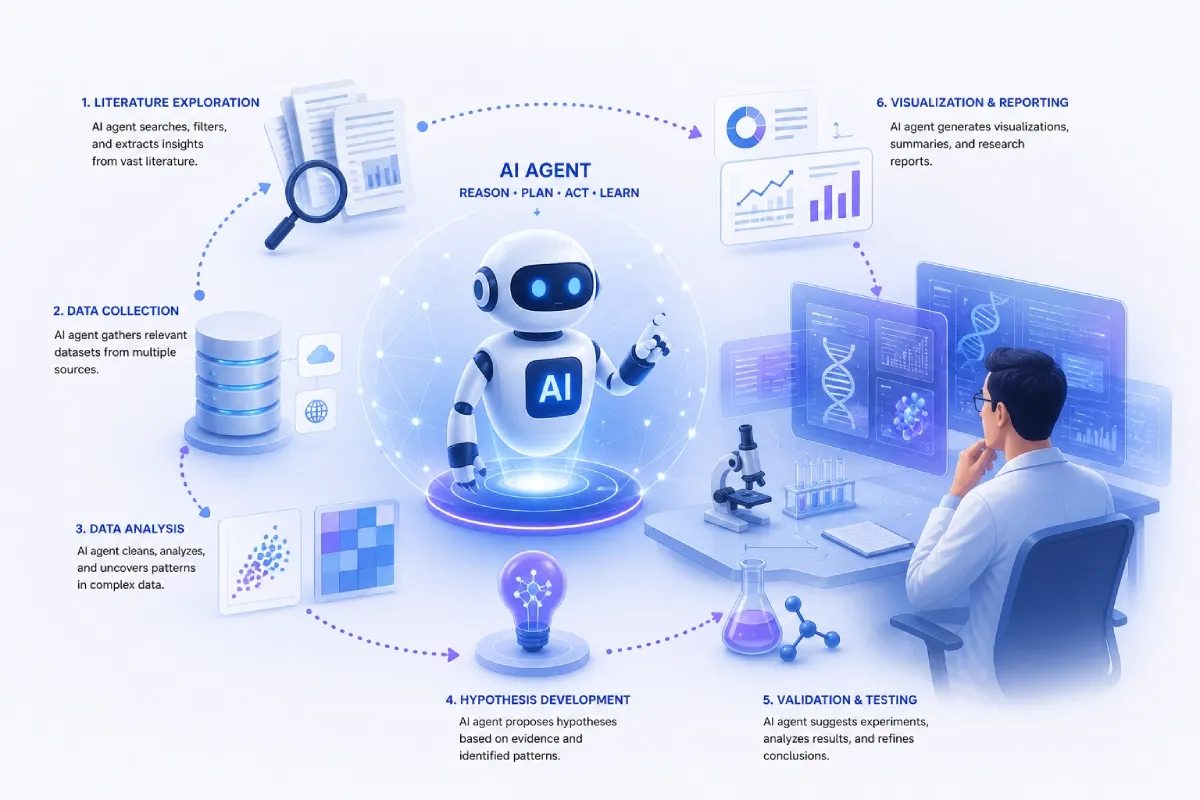
Scientific research is undergoing a significant transformation. As the volume of data and complexity of problems increase, researchers are turning to more advanced forms of artificial intelligence—not just tools, but AI agents.
Unlike traditional AI systems that respond to individual prompts, AI agents are designed to act, reason, and assist across multiple steps of a task. This makes them particularly valuable in scientific environments where workflows are iterative and interconnected.
From literature exploration to data analysis and hypothesis development, the role of AI agents in research is expanding rapidly. When used responsibly, they offer a powerful way to improve efficiency without compromising scientific rigor.
What Is an AI Agent in Scientific Research?
An AI agent is a system that can:
- Understand a task or goal
- Plan steps to achieve it
- Execute actions
- Adapt based on feedback
In the context of research, an ai agent for science goes beyond answering questions. It supports processes such as:
- Exploring research topics
- Interpreting data
- Connecting insights across studies
- Assisting with structured reasoning
This shift from passive tools to active assistants is what makes AI agents different—and increasingly valuable.
Why AI Agents Are Gaining Adoption in Research
Modern research workflows are complex and multi-layered. Researchers must constantly switch between:
- Reading literature
- Analyzing data
- Writing and revising
- Validating findings
Traditional tools help with individual tasks, but AI agents help connect these tasks into a more cohesive workflow.
Key reasons for adoption include:
- Ability to handle multi-step processes
- Improved context awareness
- Support for iterative research workflows
- Reduction in manual effort
Key Roles of AI Agents in Scientific Research
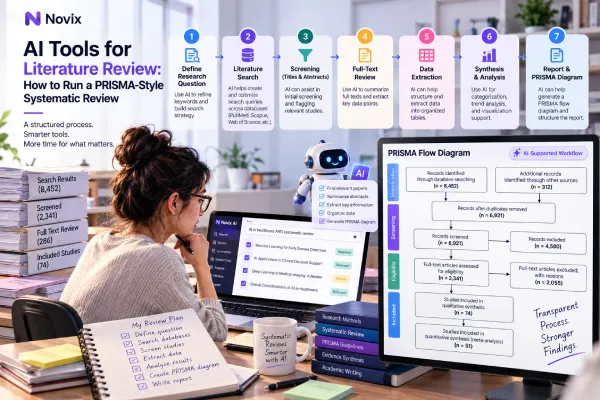
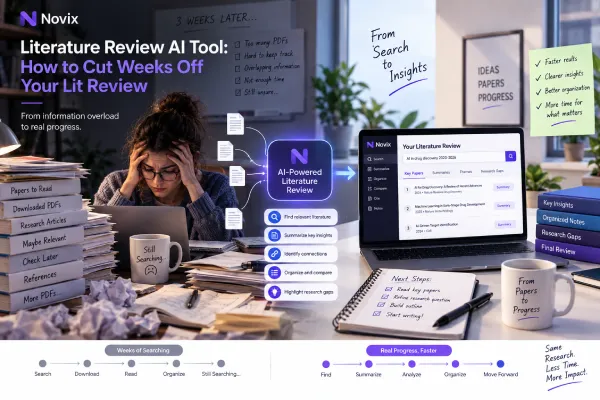
1. Literature Exploration and Understanding
AI agents help researchers navigate vast amounts of scientific literature by:
- Summarizing complex papers
- Highlighting key findings
- Comparing studies across topics
- Identifying research gaps
This enables faster transition from reading to analysis.
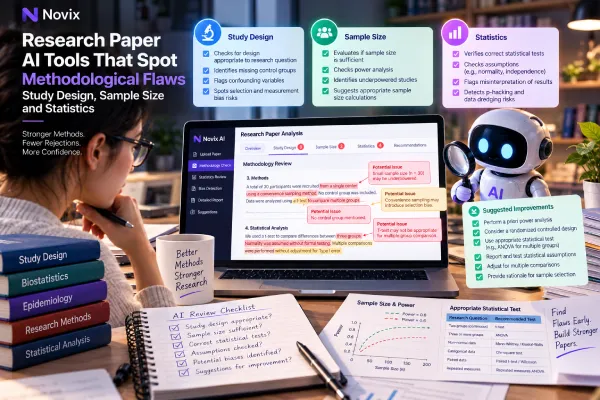
2. AI Agent for Data Analysis
One of the most important roles of AI agents is in data interpretation.
As an ai agent for data analysis, they assist researchers by:
- Explaining trends and patterns
- Helping interpret results
- Suggesting analytical approaches
- Translating complex outputs into understandable insights
They do not replace statistical methods but enhance understanding and efficiency.
3. Supporting Hypothesis Development
Research often begins with exploring ideas and forming hypotheses. AI agents help by:
- Connecting insights across sources
- Highlighting potential research directions
- Evaluating assumptions
This supports more informed and structured hypothesis generation.
4. Assisting Research Writing
AI agents contribute to writing by:
- Structuring research papers
- Improving clarity and coherence
- Maintaining academic tone
- Reducing redundancy
This allows researchers to focus more on content quality rather than formatting.
5. Workflow Coordination
AI agents act as a central layer across research activities, helping researchers:
- Maintain continuity across tasks
- Revisit previous insights
- Track logical flow of ideas
This reduces fragmentation and improves efficiency.
Benefits of AI Agents in Research
When used appropriately, AI agents provide several advantages:
Increased Efficiency
They reduce time spent on repetitive tasks.
Improved Clarity
They help simplify complex concepts without losing meaning.
Better Decision Support
They assist researchers in evaluating information and options.
Reduced Cognitive Load
They allow researchers to focus on critical thinking rather than manual processes.
Challenges and Limitations
Despite their benefits, AI agents have limitations:
Dependence on Input Quality
Outputs depend on the quality of prompts and data.
Lack of True Understanding
They simulate reasoning but do not possess real scientific judgment.
Risk of Over-Reliance
Researchers must avoid treating AI outputs as final conclusions.
Need for Validation
All insights must be verified before use in research.
AI agents are tools—not replacements for expertise.
Role of Novix as an AI Agent for Science
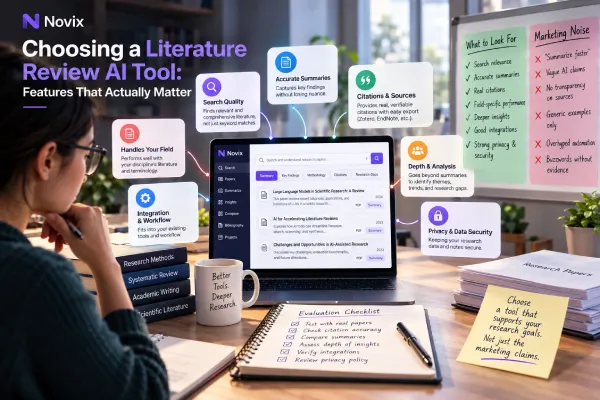
Novix is designed to function as a research-focused AI system, aligning with the concept of an AI agent in scientific workflows.
Unlike generic AI tools, Novix emphasizes:
- Structured reasoning
- Context-aware understanding
- Support for literature and data interpretation
- Alignment with research workflows
Researchers use Novix to:
- Explore complex scientific topics
- Compare findings across studies
- Support data interpretation
- Improve clarity in writing
This makes Novix a practical example of how AI agents can be applied responsibly in research environments.
AI Agents vs Traditional Research Tools
AI agents enhance workflows rather than replace traditional tools.
The Future of AI Agents in Scientific Research
AI agents will continue to evolve as part of research ecosystems.
Future developments may include:
- More domain-specific AI agents
- Better integration with research tools
- Improved transparency in reasoning
- Stronger human-AI collaboration
The focus will remain on augmenting human intelligence, not replacing it.
Frequently Asked Questions
What is an AI agent in scientific research?
An AI agent is a system that can perform multi-step tasks, assist with reasoning, and support research workflows.
How are AI agents used in data analysis?
They help interpret results, identify patterns, and support analytical thinking without replacing statistical methods.
Are AI agents reliable for research?
They can assist researchers, but outputs must be verified and validated.
How does Novix act as an AI agent for science?
Novix supports structured reasoning, literature understanding, and data interpretation, aligning with AI agent capabilities in research.