Best AI Tools for Researchers: What PhD Students and Labs Actually Use
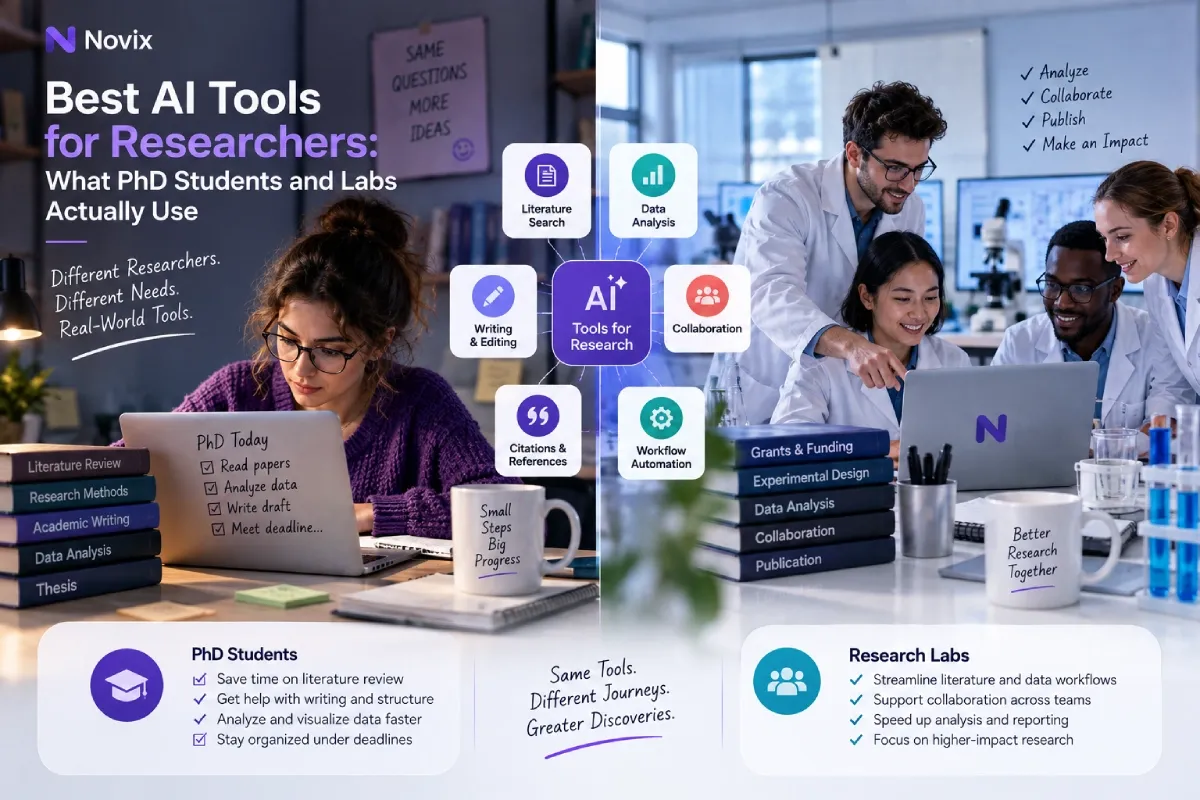
Most "best AI tools" roundups are written from a distance — a list of features compared against each other without much sense of how a real PhD student under deadline pressure, or a lab juggling three grant-funded projects, actually uses these tools day to day. The needs of a solo graduate student and a ten-person lab team overlap less than you'd expect.
This is a look at how these different groups of researchers actually use AI tools in practice, and what tends to matter most for each.
What PhD students prioritize
A PhD student is usually running one long project, alone, with limited institutional support and a hard deadline somewhere in the future. Their priorities tend to cluster around:
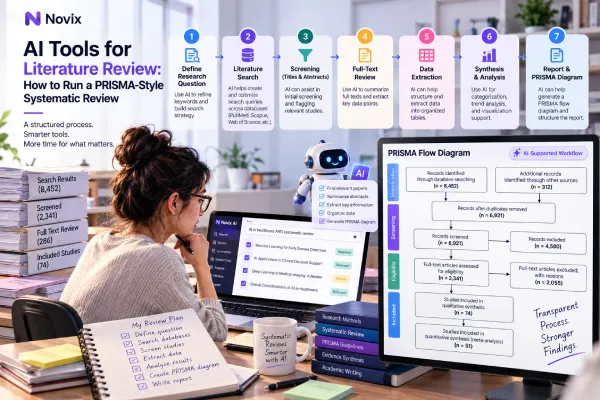
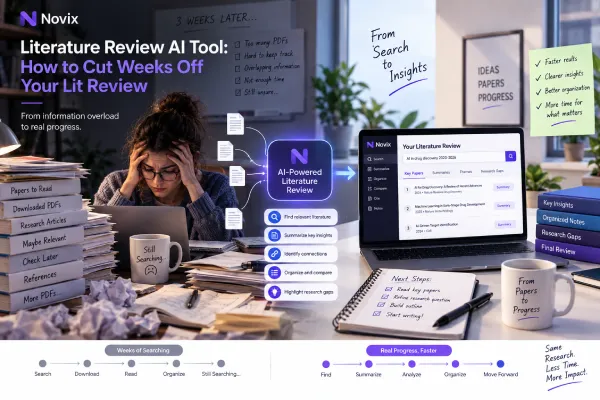
- Compressing the literature review, which can otherwise eat months at the start of a project.
- Getting a first draft of anything — a proposal, a chapter, a paper section — since staring at a blank page is one of the biggest time sinks in graduate work.
- Having a tool that remembers the project, since a PhD project runs for years, not weeks, and re-explaining context every session is a real cost.
- Affordability, since most students aren't working with a lab budget.
A tool like Novix, built around persistent project context and a free public beta tier, fits this profile well — a student can start a project, step away for weeks around teaching or coursework, and return without losing the thread.
What lab teams prioritize
Labs are usually running multiple projects in parallel, often with several people touching the same research at different stages. Their priorities shift toward:
- Affordability, since most students aren't working with a lab budget.
- Shared context across team members, so a literature review one person ran is visible and usable by everyone else on the project.
- Consistency across a pipeline, since a lab handling many projects benefits enormously from a standardized process for taking an idea from hypothesis to manuscript.
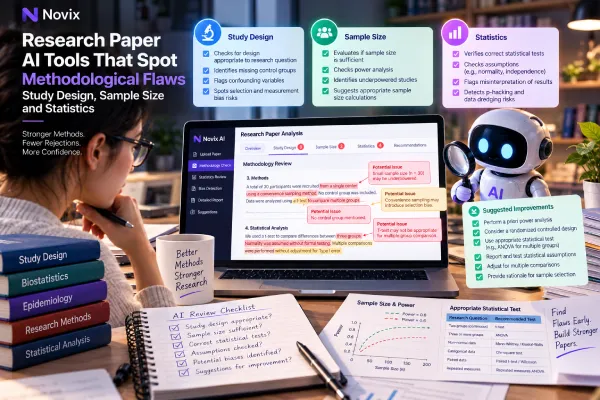
- Reducing dependency on specialist handoffs — for instance, not needing a dedicated statistician for every dataset a smaller lab produces.
- Auditability, since labs often need to trace how a result or claim was arrived at, especially for grant reporting or publication scrutiny.
What solo researchers and independent scientists prioritize
Independent researchers — postdocs between positions, researchers at smaller institutions, or those working outside traditional academic structures — often care most about:
- Doing more with less institutional infrastructure, since they may lack the specialist support a large lab has.
- Flexibility across disciplines, especially for interdisciplinary work that doesn't fit neatly into one department's tooling.
- Tools that don't assume deep technical setup, since time spent configuring software is time not spent on research.
A persona-based comparison
| Persona | Top Priority | What Slows Them Down Without AI Support |
|---|---|---|
| PhD student | Persistent context over a multi-year project | Re-establishing context after every break |
| Lab team | Shared, consistent process across projects | Inconsistent handoffs between team members |
| Independent researcher | Flexibility without heavy institutional support | Lack of specialist infrastructure (stats, writing support) |
Common ground across all three groups
Despite different priorities, a few needs show up everywhere:
- Citation reliability. No researcher, at any career stage, benefits from fabricated or inaccurate citations reaching a draft.
- Transparency in reasoning. Every group needs to understand why a hypothesis or conclusion was proposed, not just accept a polished-sounding output.
- Genuine time savings on mechanical work. Literature review, first drafts, and data wrangling are the tasks every group wants compressed, regardless of career stage.
How Novix serves these overlapping needs
Because Novix runs as a multi-agent system carrying a project from literature review through manuscript drafting, it naturally supports the persistent, cross-stage context that PhD students need for long projects, the consistency that lab teams need across multiple efforts, and the low setup overhead that independent researchers need to get started quickly — without requiring a different tool for each group.
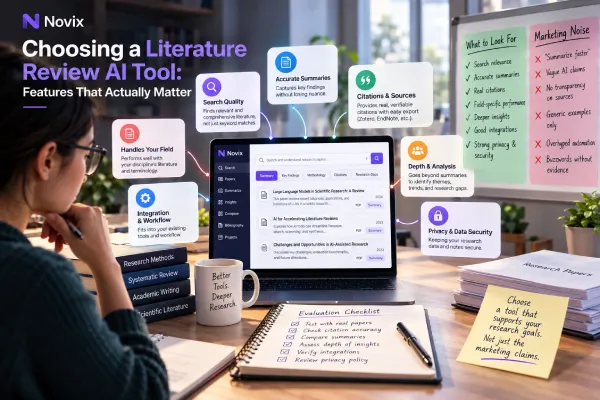
What to ask before choosing a tool for your specific situation
- How long does my typical project run? Longer projects benefit more from strong context persistence.
- Am I working alone or with a team? Teams should weight shared context and consistency more heavily.
- What specialist support am I missing? If you lack statistical or writing support, prioritize tools that cover that gap directly.
- How much setup time can I actually afford? If time is your scarcest resource, low-overhead tools should rank higher regardless of feature depth.
Frequently Asked Questions
Do PhD students need different AI tools than established labs?
Not necessarily different tools, but different priorities — persistent context and affordability tend to matter more for individual students, while shared consistency across a team matters more for labs.
Is a full-workflow AI research agent overkill for a single PhD project?
Not typically — a single, long-running project is exactly the kind of use case that benefits from persistent, connected context across every stage.
Can one tool realistically serve both solo researchers and lab teams?
Yes, if it's built around flexible, project-level context rather than assuming a specific team size or workflow.
What's the biggest mistake researchers make when picking a tool based on "best of" lists?
Choosing based on generic feature comparisons rather than matching the tool to their specific project length, team structure, and available support.