Meet The New Novix

Research is messy, multi-stage, and never really linear. Novix now works that way too.
A project can stall at the question, at the experiment, at the analysis, at the writing — or in the handoffs between all of them. And at each of those moments, the researcher is left to carry the work forward alone.
That is the problem Novix was built to solve.
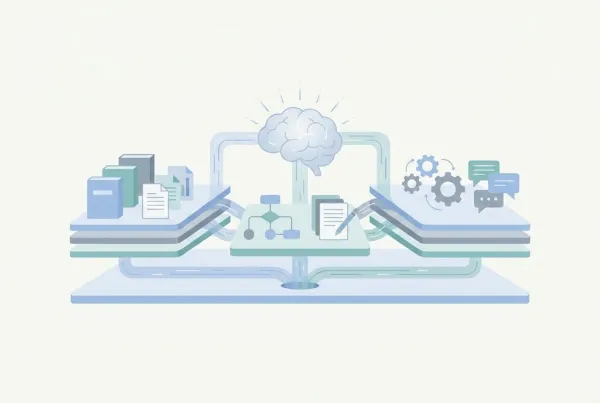
Novix is an AI agentic co-scientist: not a passive tool that waits to be instructed, but an active research collaborator that can reason about your goals, drive complex tasks to completion, and stay with you across the full arc of a research project.
With this release, Novix becomes more capable in five ways: end-to-end paper reproduction, LaTeX manuscript generation, unified context across long multi-stage workflows, deeper intent-understanding before execution, and meaningfully higher output quality throughout.
Reproduce Paper
Science rests on a foundational premise: published results should be reproducible. In practice, that premise often fails. Methods are underspecified. Dependencies go undocumented. Critical implementation details never leave the original author's environment.
The result is familiar to anyone who has done serious research: reproduction is slow, manual, and unreliable — even when it is the most essential place to begin.
With Reproduce Paper, Novix takes on this work as an agent. Provide a paper, and Novix reads the methodology, reconstructs the experimental pipeline, assembles the required environment, and drives the reproduction end to end — autonomously.
What you receive is not a summary. It is a verified, working baseline: something you can inspect, compare against the original, interrogate, and build on directly in your own research.
This capability matters most in three moments: when you are extending prior work and need a faithful starting point; when you are reviewing a paper and want evidence that goes beyond close reading; and when you are validating your own results through a clean, independent run before submission.
Reproducibility is not only a workflow problem. It is a trust problem. Good research should produce more than claims. It should produce results that others can stand on.
From Completed Work to Paper Draft
Novix has long been able to support the research process — designing experiments, running analyses, organizing data, and refining results. But when it came time to write the paper, the final step still required manual assembly.
Now Novix can help carry work across that boundary too.
With this release, Novix can generate and structure manuscripts in LaTeX — transforming finished research materials into a coherent paper draft. It can organize contributions, frame the narrative, structure sections, integrate results, and drive the transition from research output to research communication.
This is not about replacing scholarship. It is about helping researchers express their work clearly, faithfully, and in a form that others can evaluate and build on.
At its best, writing a paper is not mere formatting. It is the process of clarifying what was done, why it matters, what the evidence actually shows, and where the limits are. Novix supports that articulation — so researchers can spend less effort on structure and syntax, and more on making the underlying science stronger.
This capability is designed to reinforce good research practice: helping researchers organize, refine, and communicate their own work more effectively. The goal is not to shortcut thinking. The goal is to make rigorous thinking easier to express.
One System Across the Entire Research Workflow
Previously, different expert agents could feel powerful in isolation but fragmented in practice. Each handled a specific task, and the burden of connecting the work — carrying intent forward, preserving decisions, maintaining direction — fell back on the researcher.
That changes with this release.
Novix now operates as a unified agentic system across long, multi-stage research workflows. Context carries across steps without being reintroduced. Decisions made in one phase inform the next. Prior work remains accessible and actionable throughout. Rather than coordinating between disconnected tools, you work with a single co-scientist that stays oriented over time.
That means you can move from ideation to planning, from planning to experimentation, from experimentation to interpretation, and from interpretation to writing — without losing the thread. You can make precise, iterative refinements along the way: redirecting a result, revising a section, adjusting the framing, or reworking part of an analysis — without starting over.
This is what agentic research support actually means: not a smarter autocomplete, but a collaborator that can hold a complex project in mind, coordinate its own actions across that complexity, and keep moving the work forward.
Deeper Understanding Before Execution
Strong research outcomes come from understanding the real objective beneath the request — the research context, the constraints, the standards of the field, and the gap between what was asked and what is genuinely needed.
With this release, Novix is more capable of asking follow-up questions and pushing for clarification. It can probe for missing assumptions, surface ambiguities, and flag underspecified directions before they propagate into mediocre outputs.
This matters because many research failures do not begin in execution. They begin earlier — with a poorly framed question, an underspecified goal, or a mismatch between what the researcher needs and what the system proceeds to optimize for.
By engaging more deeply upfront, Novix builds a more accurate model of your intent, your context, and your standards. That makes it far more likely that what it produces will not just be technically correct, but genuinely aligned with your judgment — your research goals, your writing voice, and your sense of what rigorous work looks like.
A co-scientist that understands you well enough to push back is far more valuable than one that simply complies.
Stronger Capabilities, Higher-Quality Outputs
One of the most visible improvements in this release is the quality of Novix's writing output.
If the previous update to Novix's agentic system addressed how research workflows hold together, this improvement is about what that coherence ultimately produces — and the quality of the writing itself.
Compared with before, Novix now produces manuscripts that are more complete, more coherent, and more polished overall. The structure is stronger, the narrative holds together more naturally, and the final draft is closer to something researchers can seriously refine and use.
That improvement is rooted in deeper system changes. With a stronger agent framework and better context management, Novix is now better able to carry research context across long, multi-stage workflows — preserving the background, decisions, analyses, and intermediate results that should inform the final paper.
In other words, what has improved is not just Novix's ability to write, but its ability to carry the full research process forward into a substantially stronger manuscript.
A More Complete Co-Scientist
This release is about more than adding features. It is about what an AI co-scientist should actually be capable of.
This update is now live. We are excited to see what you build with it.
Start your next project with Novix.
Whether you are reproducing a foundational paper, designing a new experiment, or turning months of work into a manuscript — Novix is ready to work alongside you from the first question to the final draft.